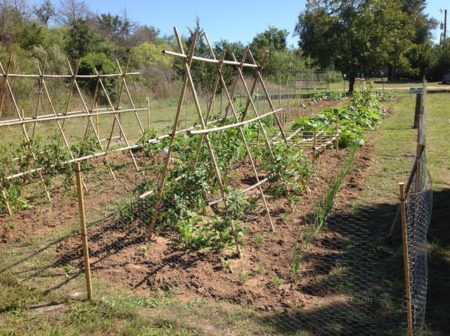
Here are a few ways to trellis tomato plants, so that you can get greater yields, reduce diseases, and create easy access for care for and harvest your garden’s tomatoes. Trellising is generally only necessary for heirloom and other indeterminate tomato types.
Indeterminate varieties of tomatoes are also called “vining” tomatoes. They will grow and produce fruit until killed by frost and can reach heights of up to 10 feet although 6 feet is considered the norm. They will bloom, set new fruit and ripen fruit all at the same time throughout the growing season.
5 Ways to Trellis Tomato Plants
- Stake
- Cage
- Weave
- Panel
- String
- Get Creative!
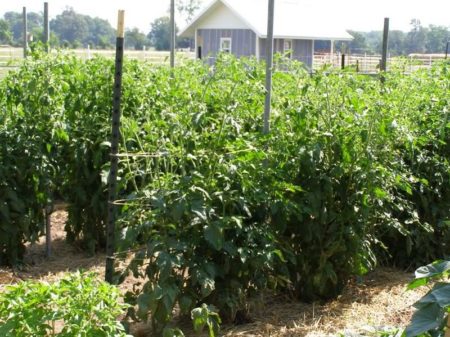
Use a wooden or plastic stake to support tomatoes by driving it securely down into the soil near the base of each plant. Then tie the main stalk of the plant to the stake, leaving the string or velcro loose enough to allow for the season’s growth. You may adjust the ties or add more as the plant grows.

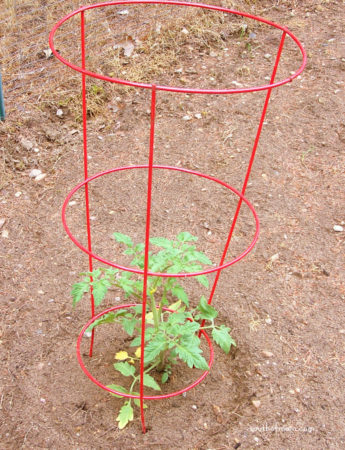
Tomato cages come in various sizes, shapes, and colors. Insert the cage into the soil around the plant and check throughout the season to make sure the plant is being adequately supported, especially on the fruiting hands where maturing fruit can add extra weight.
Some call this the “Florida Weave”, and it relies on stakes placed intermittently between plants. String attached to the stakes is woven by running string on one side of one plant and then the other side of the next plant, and so on to the end of your row. Run the string back in the opposite direction to support each plant on both sides, and secure the string to the end post. As the plants grow taller, string again about 8-12″ above the previous string. There are many detailed step-by-step instructions online for this exact process. Also used extensively with determinate tomatoes.
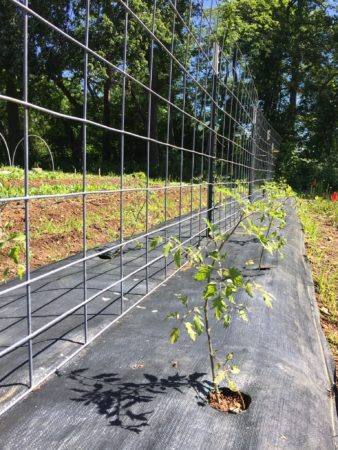
Cattle panel is the most commonly used sturdy wire paneling used in this method, and these measure 4’x16′. Panels are secured to T-posts that are driven into the soil along a row of tomato plants. I use this method exclusively, and I like to set up the panels prior to planting if possible, because the panels can be cumbersome to move and possibly damage plants that have already been set. I use zip-ties to fasten the panels to posts. These can be reused for many seasons.
Stringing tomatoes starts with a sturdy frame system, and then uses strings that hang down from the frame to clip tomato growth points to the string. These clips can be adjusted through the season, or more clips added onto the string.

Have you got bamboo or some other useful materials lying around the yard? You can support your growing tomato plants in many different ways! Keep the stems off the ground to keep them from rooting, and keep leaves and fruit off the ground to reduce pest and disease pressure. Have fun setting up your garden’s tomato trellis!